
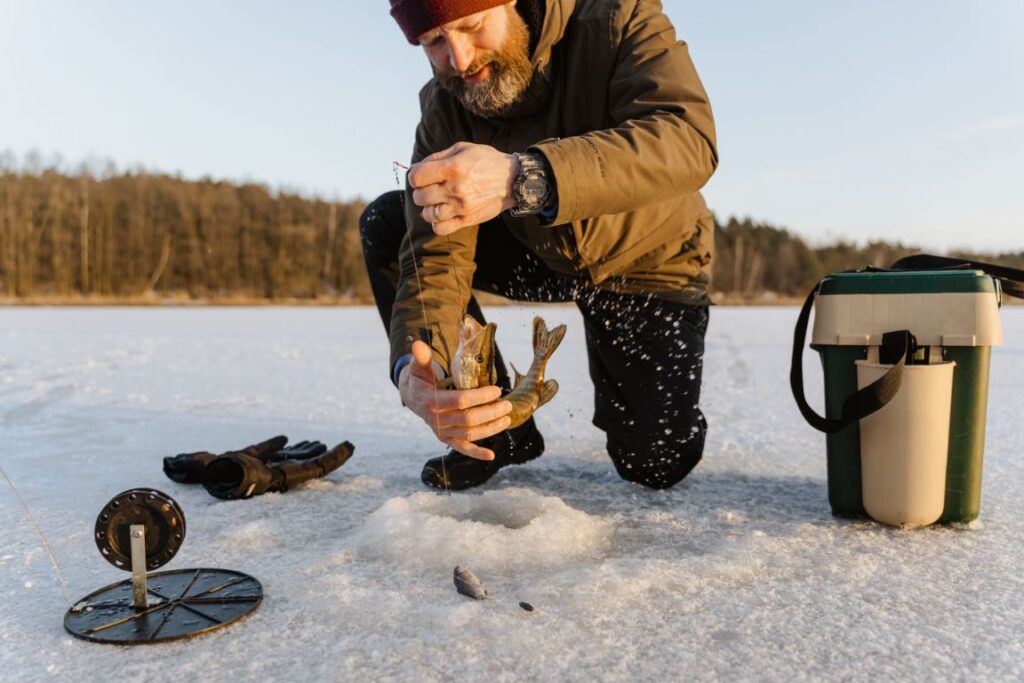
Winter fishing is worth it. Many lakes and rivers stay productive all winter, the crowds are gone, and species like walleye, perch, crappie, pike and trout keep feeding. The catch is that cold water changes how fish behave: they gather in fewer places, move less and take smaller, slower baits. This guide covers the types of winter fishing, what to target, where fish hold, how to fish for them, and how to stay warm and safe, with links to our detailed guides on each topic.
Winter fishing at a glance
- Best species: walleye, yellow perch, crappie, northern pike, trout and steelhead; bass in milder regions. See 10 best winter fish species to target.
- Best time of day: often late morning to mid-afternoon, when the water is warmest.
- Where fish hold: deeper basins, the edges of drop-offs and the warmest water available.
- Biggest adjustment: fish slower and smaller.
- Safety first: cold water is dangerous even near shore; on ice, check thickness before every step out.
Types of winter fishing
Open-water fishing on lakes and reservoirs. Where water stays unfrozen, you can fish from shore, a boat or a kayak. Fish gather in deeper, more stable water, so a depth finder and a slow presentation pay off. Start with how to locate fish in winter.
Rivers and tailwaters. Moving water below dams and spring-fed streams often stays fishable all winter, and trout and steelhead are classic targets. Fish the slower, deeper pools rather than fast riffles.
Ice fishing. Once lakes freeze safely, you can fish through holes drilled in the ice for perch, walleye, pike, crappie and trout. It needs its own gear: a shelter, warm boots and bibs, short rods and a flasher. Our Ice Fishing hub has guides to all of it.
Coastal and saltwater fishing. In mild coastal regions, winter can be a good time for inshore species that move into bays, creeks and deeper channels as the water cools. Check local regulations and seasons before you go.
What to catch in winter
Some fish slow down in cold water; others stay active and feed through the season.
- Walleye feed actively in cold water, especially in low light.
- Yellow perch and bluegill school up and are reliable targets, especially through the ice.
- Crappie hold in schools over deep structure, then move shallower in late winter. See how to find crappie in late winter.
- Northern pike stay aggressive and often roam weed edges.
- Trout and steelhead handle cold water well; steelhead runs peak in many rivers in winter.
- Largemouth bass slow down a lot but still feed; see winter bass fishing techniques.
Our 10 best winter fish species to target covers each one and where to find them.
Where fish hold in cold water
Cold water pushes fish toward stability and comfort. Look for:
- Deeper water near structure: basins, channel edges and the bottom of drop-offs, where temperatures change least.
- The warmest water available: sun-facing banks, dark-bottom bays and inflows can be a few degrees warmer and draw fish on sunny afternoons.
- Suspended schools: fish often hang off the bottom over deep water; electronics help you find them.
Learn more in how to locate fish in winter and how to read water temperature for winter fishing.
How to fish in winter
Slow down. Cold fish won’t chase. Use slower retrieves, longer pauses and lighter, smaller baits. See how to fish slow in cold water.
Fish vertically. Dropping a jig straight down to fish you can see on a depth finder or flasher keeps your bait in the strike zone. See vertical jigging techniques.
Watch the weather. Stable conditions and the period before a front often fish best, while the day after a cold front can be slow. See how barometric pressure affects fishing.
Keep your line working. Freezing guides and stiff line cost fish; how to keep your fishing line from freezing covers line choice and quick fixes.
For a full technique walkthrough, read how to fish in cold water.
Ice fishing basics
Ice fishing has its own set of gear and skills:
- Shelter: a portable or insulated shelter blocks wind and makes long days bearable. See best ice fishing shelters.
- Boots and bibs: warm, waterproof boots and insulated bibs. See best ice fishing boots and best ice fishing bibs.
- Rods, line and jigs: short ice rods, line made for cold, and small jigs. See ice fishing rods, ice fishing lines and ice fishing jigs.
- A flasher shows fish and your jig under the hole. See ice fishing flashers.
New to it? Start with ice fishing tips and techniques. Fishing the last weeks of the season? Read late-season ice fishing for thinning-ice safety.
What to wear and bring
Dress in layers: a moisture-wicking base layer, an insulating mid layer and a windproof, waterproof outer shell. Keep hands, feet and head warm, and carry a spare set of gloves. Our how to dress for winter fishing guide explains each layer. For clothing picks, see the Winter Sports hub: winter jackets, cold weather gloves, thermal underwear and rechargeable hand warmers.
Winter fishing safety
- Cold water is the biggest risk. A fall into cold water can quickly cause cold shock and loss of muscle control. Wear a life jacket in boats and kayaks, and a flotation suit or bibs on ice when you can.
- Check ice before every trip. A commonly cited guideline is at least 4 inches of clear ice to walk on, and far more for snowmobiles and vehicles. Ice thickness varies across a lake, so check local conditions and test as you go.
- Never go alone, and tell someone where you’ll be and when you’ll be back.
- Carry ice picks, a spud bar and a throw rope on ice, and a dry bag with spare clothes on any winter trip.
How to start winter fishing: a simple plan
- Pick one water and one species. A nearby lake for perch or crappie is an easy start.
- Go midday on a calm, stable-weather day.
- Fish deeper and slower than you would in summer, with small jigs or live bait.
- Dress in layers and bring hand warmers.
- Check safety: life jacket on open water; ice thickness on hard water.
Winter Fishing FAQ
Do fish bite in winter?
Yes. Fish eat less often in cold water, but many species keep feeding all winter. Fishing slower, smaller baits in the right depth is the key.
What is the best time of day to fish in winter?
Often late morning to mid-afternoon, when sunlight has warmed the water a little. Walleye can also bite well around dawn and dusk.
What bait works best in winter?
Small jigs, live bait such as minnows and waxworms, and slow-moving soft plastics. Downsize compared with summer.
Can you go fishing in winter without ice fishing?
Yes. Open lakes, reservoirs, rivers, tailwaters and mild coastal waters can all be fished from shore, a boat or a kayak in winter.
Is winter a good time for beginners?
It can be. Waters are quieter and panfish like perch and crappie bite well. Start with a short, midday trip, dress warmly and put safety first.